Homes of Merit was founded by Chuck Weeder in 1973. Chuck had a vision to create a company that produced quality HUD-code manufactured homes. In 1973, his company produced approximately 2.5 million dollars in sales. In 1984, Homes of Merit production capabilities had reached a maximum in the now 3 plants. Orders for homes were so strong they were not able to build the homes fast enough. The company expanded into Lake City, Florida and production began in 1985. Another plant was built in 1988 next to the existing plant in Lake City, Florida to keep up with sales. In 1996 in response to strong sales and the desire to move into a different product line, plant 3 was built. As a result of its growth, Homes of Merit has become the largest single location producer in the State of Florida. Because of tremendous success Homes of Merit was acquired by Champion Enterprises in January of 1999.
Modular
Home Book Resources Popular Buying Guides for
Modular Homebuyers
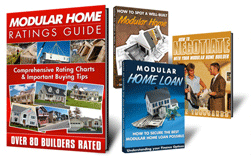
When trying to select a modular home the
first place to start is at the factory level. Knowing which factories
deliver to your area is the first step in understanding your options.
The second and most important step is determining how the factories
compare to each other in the areas of: Quality Construction,
Design/Style, Appraised Value and Price.
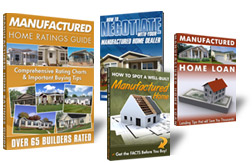
The manufactured housing industry has made some serious
improvements in recent years regarding quality construction and
residential appeal. With modern day technology and assembly line
techniques, the industry is overcoming the misconception that
manufactured homes are poorly built and don’t measure up to stick-built
homes.
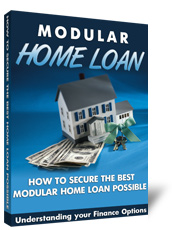
Knowing your financing options is the first step to
securing a good deal. We have spoken with hundreds of modular home
lenders and Mr. Eaton the author has gone through the process himself.
Learn from his insight and you can avoid some common mistakes people
make when financing their home.
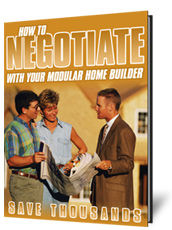
On average 80% of homebuyers pay too much for their
modular home. Not surprising with all the choices one must make from
negotiating with your builder to purchasing property and
site-improvements. This resource will reveal important negotiating
secrets and dealer profit margins that will give you an edge when
negotiating with your builder.
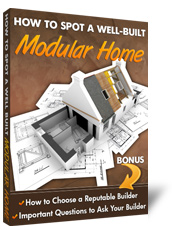
Most modular home builders have display models for
potential home buyers to walk through. These models are professionally
decorated to impress buyers with elaborate decorations, elegant
furniture and dazzling floorplans. Aesthetics are important but would
you purchase a modular home based on looks and compromise structural
integrity? Don’t be fooled by appearances and miss what really matters;
“Quality Construction.”
Modular Homes Construction In the 1960s, the mobile home industry made an evolutionary split. One branch evolved into recreational vehicles RVs to the point where the house now tows the car. The other branch evolved into manufactured homes, 95 percent of which now become permanent dwellings once they are transported from the factory to the site. Factory built housing is also popular in many countries around the world.
Modular Construction Facts Factories are located to make the most efficient use of transportation, materials and labor. Therefore, the houses can be built better and more efficiently and more economically. Also, there is less waste and none of the theft, vandalism and weather damage common with stick-built construction. After delivery to the site, all factory-built housing can be assembled, closed in and occupied in a matter of days or weeks.
Modular Homes Mississippi A manufactured home is built entirely in the factory under a federal building code administered by the Department of Housing and Urban Development HUD and is classified as a Manufactured Home. These homes are constructed to meet the Federal Manufactured Home Construction and Safety Standards Act, which has been in effect since June 15, 1976. The Federal standards regulate, manufactured housing design, construction, strength, durability, transportability, fire resistance, energy efficiency and quality. The HUD Code also sets performance standards for the heating, plumbing, air conditioning, thermal and electrical systems.